
Use Case
As an MDM user, one question that comes up often is why did these records match with each other?
This article is here to help you make sense of those cases.
Troubleshooting
Pre-requisites:
To understand how/why records matched together, you need to access below information:
- Match rules.
- Data:
- DU table (this table stores references to pairs of records detected as duplicates in the matching phase, with the match rule and match score.).
- UM table (this table contains the master records that have been manually re-grouped by users using duplicate managers).
- MI and MD tables.
- GD table.
Troubleshooting steps:
- Check the pairs of masters that have been identified (DU table).
- Check if there was any manual decision applied (UM table).
- Check what attributes are used in the match rule mentioned in the DU table and go browse the associated data in the master tables.
- Is Multi Iteration Grouping checked?
- The way multi-iteration group works is that it groups all of records with the highest matched score together. For example, if you have multiple rules that score at 100. What multi iteration grouping does is it groups all of the matches that score at 100 first together as a match group.
- Is Transitive Scoring checked?
- This method takes into account the direct matches found with the rules, plus indirect transitive matches, which are computed. The group score is also the average of the match scores in the group
- Also please take note of the merge policy threshold. Records can only merge together if the confidence score is higher than the merge policy value.
Example:
Using these matchers:
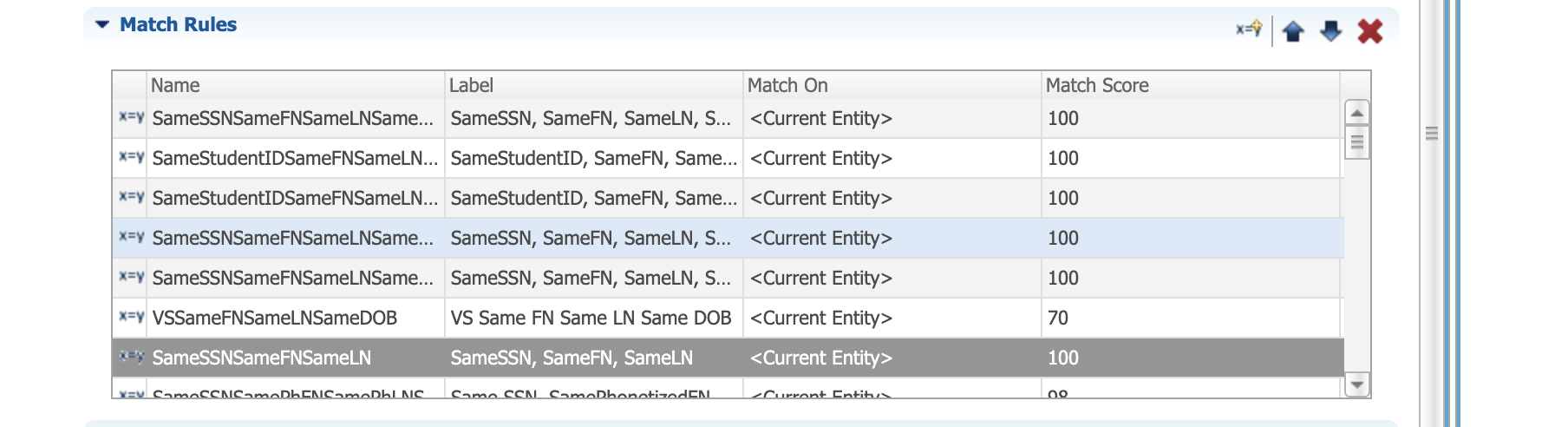
Lets analyze sample records:
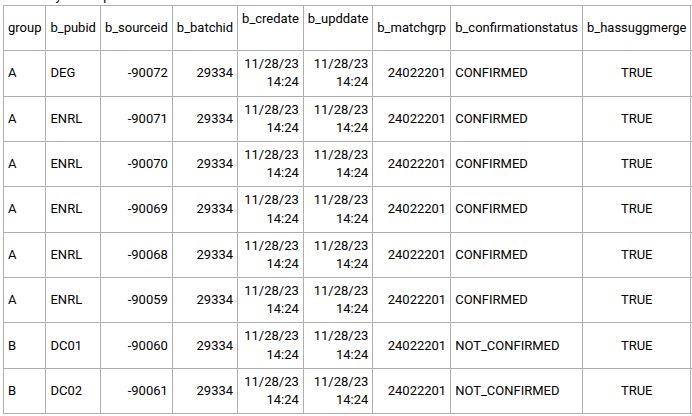
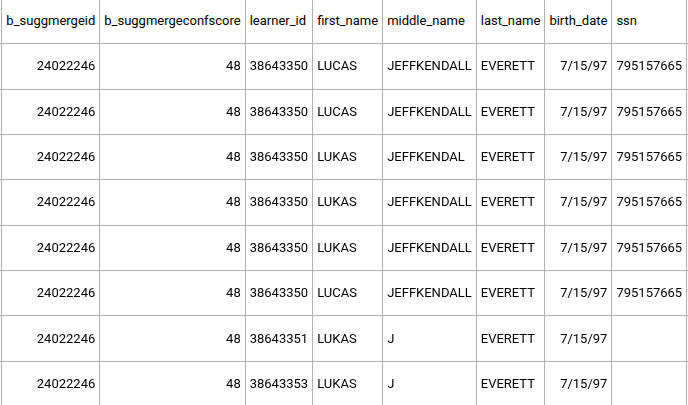
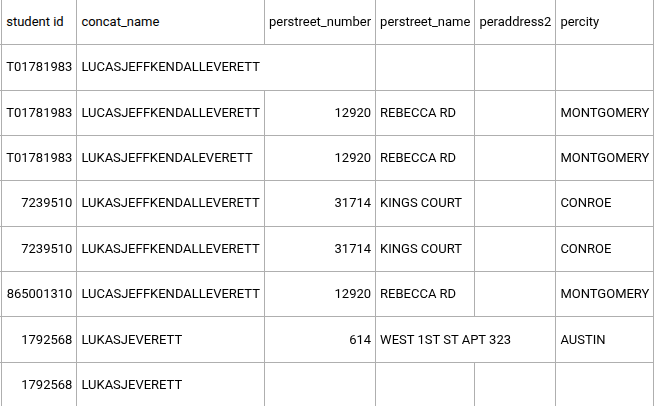
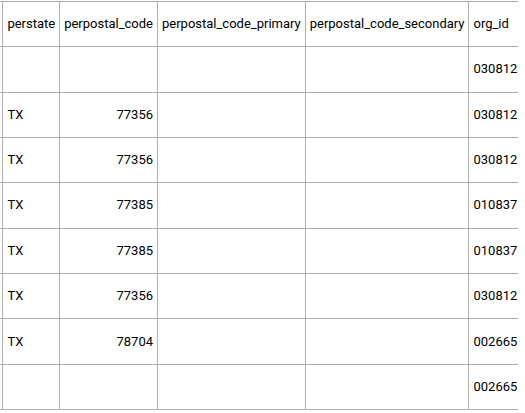
In this example Multi Iteration grouping is enabled but Transitive Scoring is disabled, which means it will be using direct scoring:
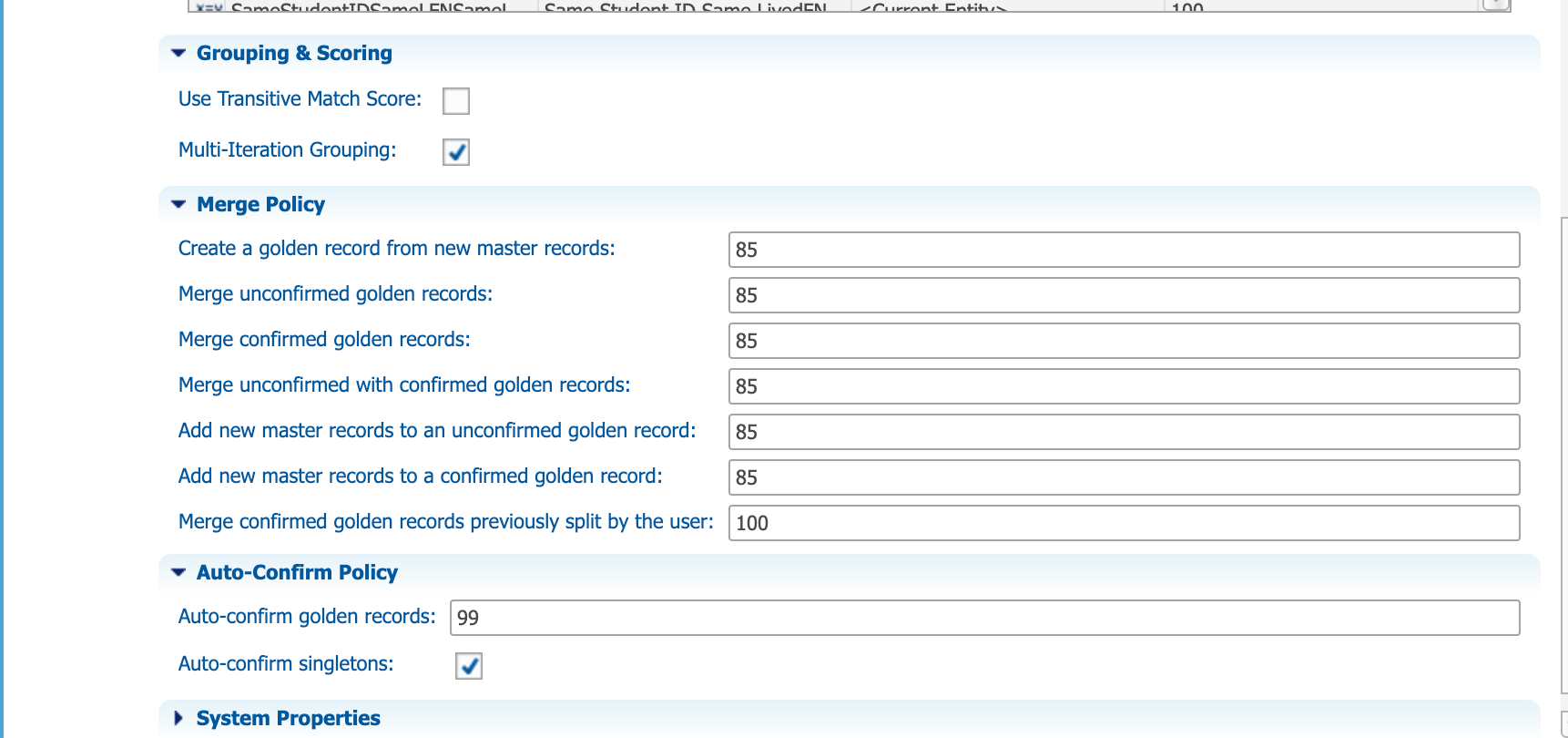
When analyzing group B and comparing it to group A, you will find that:
- -90060 and -90061 directly matched on a score of 100.
- However, in multi iteration grouping we also have to account for the other matches:
- For example -90060 matched with 3 other records in Group A with a score of 70.
- However that means there are 3 other records in the group with a match score of 0.
- In that case the overall score of just the sample in the diagram is 44.
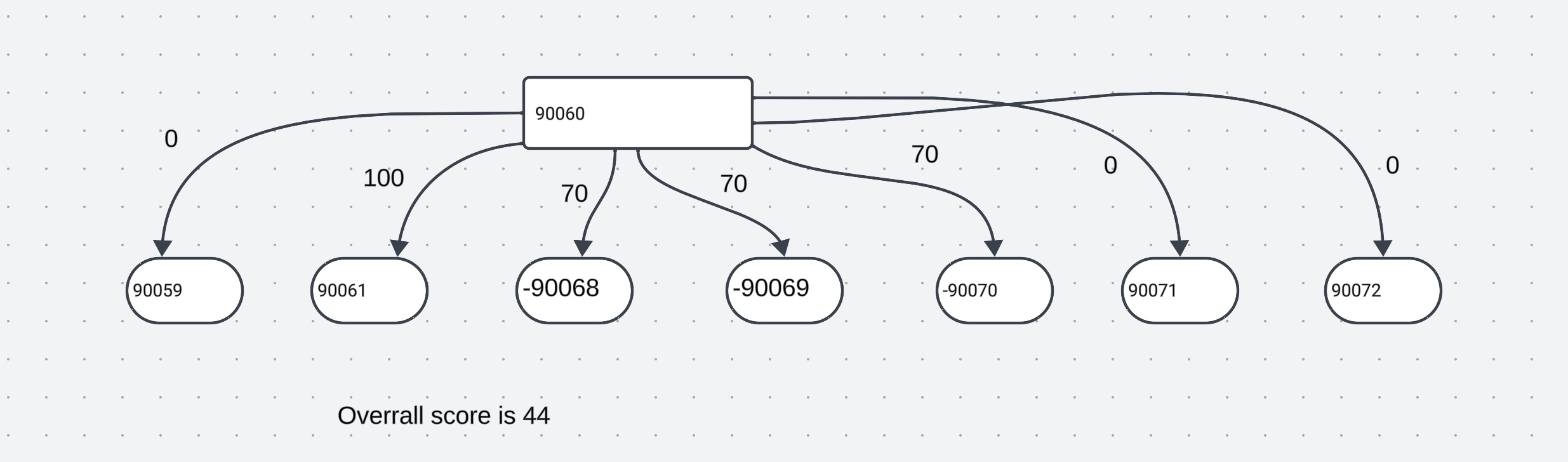
> Based on the merge policy below, these records would became suggestions and would not automatically merge.